
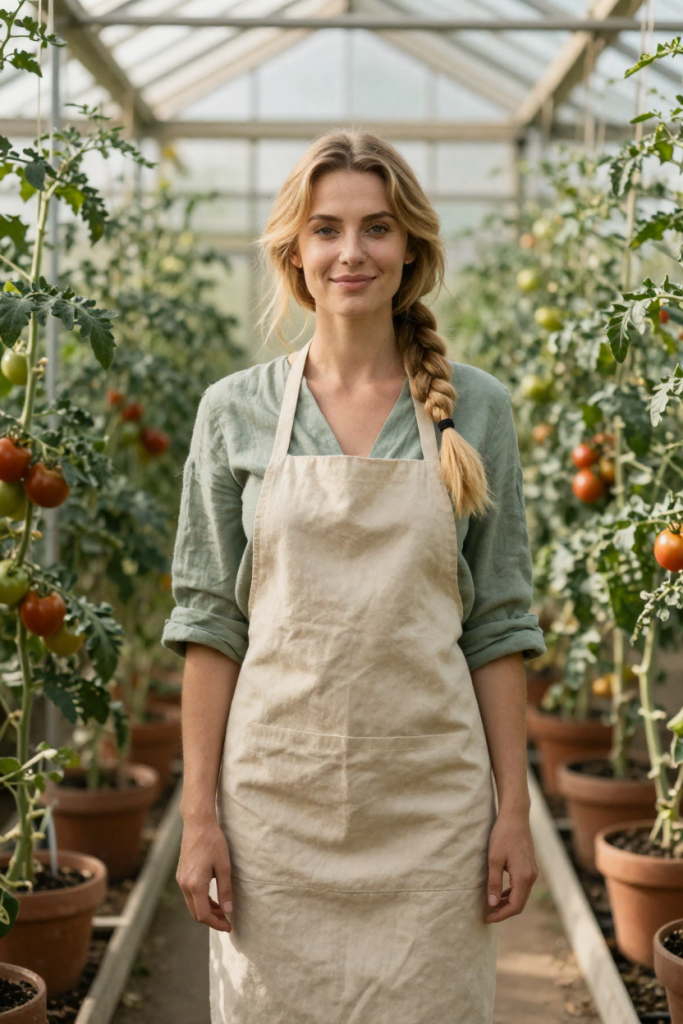
Ask a room of AI creators why their series drift and most will blame the model. Watch their prompts, though, and the cause is gardener’s error: the character is re-described from memory every session, and memory edits. One week she has “long sandy hair,” the next “golden waves,” and the audience watches a stranger take over the row. The fix is unglamorous and total — write the character down once, as a seed brief you paste, not a description you retype.
The anatomy of a seed brief
A working brief has five anchors, in this order: age (always 25 or over, stated as a number), hair (colour, length, one default style), build (two or three words, no more), face (one or two durable details — freckles, a strong brow, green eyes), and a signature (the pendant, the ring, the beauty mark that survives cropping). Everything else — wardrobe, set, light, pose, mood — is a scene line, and scene lines are supposed to change with the bed.
Two rules keep the brief healthy. First, anchors are phrased positively and concretely: “long sandy-blonde hair in a loose fishtail plait” germinates reliably; “beautiful hair” is an opinion the model re-interprets every time. Second, the brief is versioned. When you deliberately evolve the character — a haircut arc, a new signature — save the new brief as version two and date it, so earlier sets remain reproducible, like seed saved from a good year.
Growing a season on the brief
Production then becomes mechanical in the best way. Brief a set by pairing the seed brief with three to five scene lines sharing one setting and light setup. Grow wide at the standard model’s 6-credit price, harvest the best third, and only then spend on edits, grafts and upscales. When a frame comes back off-character, the diagnosis is fast: either a scene line contradicted an anchor (a “short bob” scene line fighting the brief’s plait) or the brief itself has a vague anchor to tighten.
What the brief cannot do
It cannot rescue a character who was never decided on paper. If your anchors are adjectives — gorgeous, stunning, perfect — nothing will hold her row straight. Decide the woman first. The seed brief is not where creativity happens; it is where creativity is stored, dry and labelled, ready for every sowing.